Other Offices in Italy
Corso Castelfidardo 30A, 10129, Torino (TO), Italy

AdapTronics s.r.l. is a deep-tech startup that is reinventing the way robots and automated machines grasp and interact with any object, on Earth and in Space.
Founded in 2022 as a spin-off company of the University of Bologna, Adaptronics leverages over a decade of academic research in electroadhesion, soft robotics, and flexible electronics to develop next-generation gripping systems that are versatile, fully electric, ultra-efficient, and smart.
At the core of AdapTronics’ innovation is its proprietary Electro Active Adhesive Layer (EAAL), a flexible thin-film interface that becomes adhesive on command via electrostatic forces. The EAAL offers robust, yet delicate gripping capabilities on objects of any shape or material, without the need for mechanical actuation, pre-installed fixtures, or heat dissipation. Embedded AI-powered sensor capabilities provide real-time feedback on proximity, contact, and exchanged force, enabling fast, safe, and intelligent grasping.
AdapTronics operates through two business verticals:
The company employs 15 full-time people, is based in Bologna for R&D and industrial operations, and in Turin for its space business. AdapTronics is backed by public co-financing and private venture capital investments, and is an ESA BIC Turin alumni.
With its versatile and scalable core technology, AdapTronics aims to become a global reference for intelligent, sustainable, and adaptable robotic grasping systems.
Via Filippo Turati 40, 20121 Milan Milan, Italy
Via Filippo Turati 40, 20121 Milan Milan, Italy
Alessia Gloder - Director of Space Applications
+39
alessia.gloder@adaptronics.it
info@adaptronics.it
https://www.adaptronics.it/
2022
Upstream
Corso Castelfidardo 30A, 10129, Torino (TO), Italy
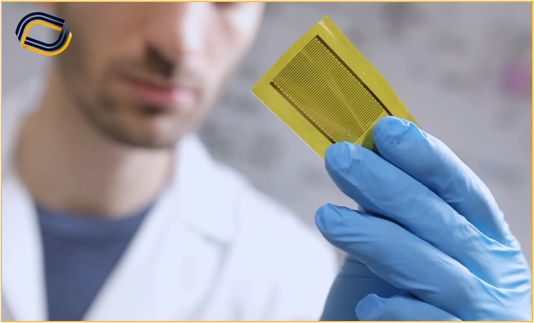
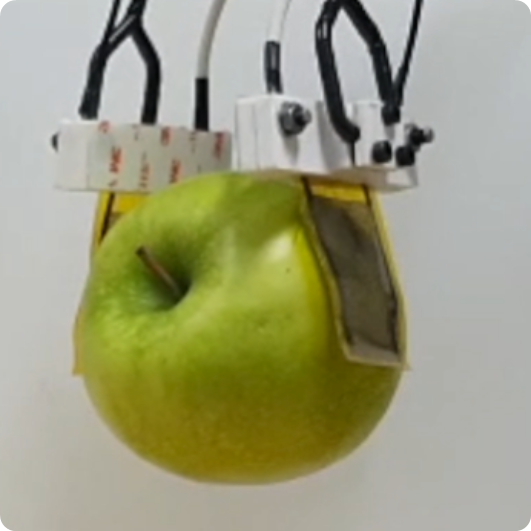


AdapTronics’ core innovation is the Electro Active Adhesive Layer (EAAL): a proprietary thin-film interface that becomes adhesive on command through electrostatic forces. Developed through advanced flexible electronics manufacturing, the EAAL is lightweight, conformable, and energy-efficient, requiring only milliwatts to maintain a grip and less than 10 milliseconds to activate or release.
Beyond its adhesive functionality, EAAL embeds capacitive sensors and supports AI-powered signal processing. This allows the system to detect proximity, confirm contact, estimate applied force, and infer the material properties of the object being grasped. As a result, the EAAL transforms any robotic end-effector into an intelligent and adaptive interface, capable of executing complex manipulation tasks with precision and control.
Originally developed for industrial use, the EAAL has been engineered into a space-qualified version, the SpacEAAL.
While future space operations will rely heavily on robotic systems capable of performing autonomous manipulation and capture of both cooperative and non-cooperative objects, current grasping technologies, such as mechanical clamps or magnetic systems, often require target preparation, are bulky and consume significant power, which limits their versatility and increases mission risk.
Adaptronics addresses these limitations by designing, manufacturing and commercializing grasping solutions based on the physical principle of electroadhesion, that therefore do not require any physical hooks, anchors, or pre-installed grappling fixtures. The SpaceEAAL works on flat or curved surfaces, adheres to a wide range of materials - including aluminum, composites, solar panels, and thermal blankets - and enables soft, residue-free contact while requiring no heat dissipation, and consuming minimal electrical power.
SpacEAAL-based grasping systems can be seamlessly integrated into a wide range of orbital robotics platforms, from satellite servicing arms to debris capture mechanisms and autonomous docking tools, thus unlocking unprecedented robotic handling capabilities.
The technology has already undergone successful testing in Adaptronics’ proprietary vacuum chamber and in simulated microgravity, where it demonstrated the ability to capture a 100 kg structure. SpacEAAL is currently at TRL 5[CCC1] , with its first In-Orbit Demonstration (IOD) scheduled for Q4 2026.
SpaceEAAL-based solutions are being developed to support a variety of operations in orbit and beyond:
The embedded sensing capabilities of the SpacEAAL contribute to greater autonomy and safety in these operations, enabling precise and adaptive control even in the absence of full visual guidance or teleoperation.
In parallel with its space developments, AdapTronics has achieved significant maturity in the industrial automation sector, where EAAL-powered gripping systems are already being deployed in real-world production environments, in sectors such as packaging, labeling, and e-commerce logistics.
These industrial applications benefit from the EAAL’s ability to safely grasp deformable, delicate, or irregularly shaped items without leaving marks or requiring bulky and energy-intensive pneumatic systems. The EAAL enables a fully electric, silent, efficient and lightweight alternative to pneumatic suction cups and mechanical grippers, with the added advantage of built-in sensing capabilities for intelligent feedback.
AdapTronics currently has over 10 active Proof-of-Concept projects with leading industrial machine manufacturers. The systems in use have reached TRL 8, and the company expects to launch its first certified commercial products by the end of 2025.
NA